YOUR CART
IS EMPTY
IS EMPTY

Traffic jams, repeated accidents, or accidents that shouldn't happen but do, leading to loss of life and property, all stem from a lack of respect for traffic laws. Many drivers are still selfish, taking advantage of others, and also create dangerous negligence for themselves and their fellow road users.
So, how can we solve or help each other? Let's look at examples of ‘Prohibited Driving Behavior on the Road’ which still has many 108 thousand other problems awaiting solutions. But if we Stop! these problems ourselves or help recommend them to those close to us, these small issues will decrease, and society will definitely become more livable.
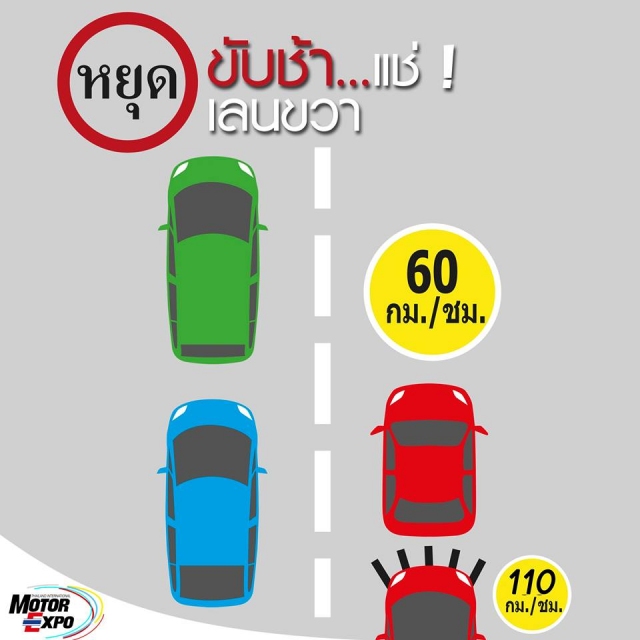
According to the law, the right lane is only for overtaking. Once in the right lane and having overtaken to a safe distance, drivers must move back into the left lane and not linger in the right. This is because the right lane is for high-speed traffic. Driving slowly in the right lane not only causes annoyance to drivers behind but also increases the chance of accidents on the road. This is due to a blind spot when a vehicle behind is about to swerve to overtake on the left, which the driver in the right lane cannot see. There is a high chance of veering into a vehicle in the left lane ahead, which usually travels at speeds of approximately 60-80 km/h, leading to collisions.
"The idea that driving slowly in the right lane is acceptable because one believes they are adhering to the legal speed limit is incorrect. According to traffic laws, drivers behaving in this manner are committing two offenses: 1. Section 34 stipulates that on roads with more than two traffic lanes, drivers must keep to the far left. Failure to comply may result in a fine not exceeding 1,000 Baht. And 2. Obstructing traffic, with a fine ranging from 400-1,000 Baht."
For safe driving, everyone must cooperate and follow traffic laws. In this case, if a driver traveling slowly in the right lane sees a vehicle approaching at high speed, they should yield the lane because the right lane is for overtaking. However, drivers in the right lane traveling at high speeds are also liable for exceeding the legal speed limit, which is the duty of officers to detect speed violations on the road.
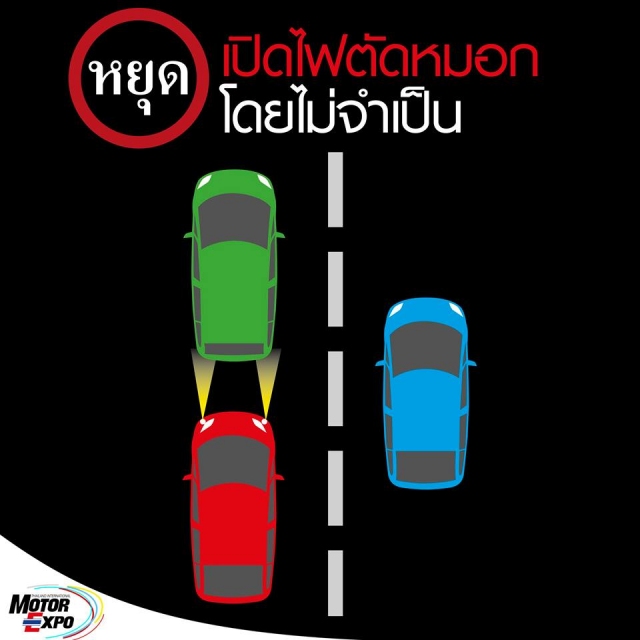
Don't think...that fog lights can be turned on anytime. In reality, fog lights are meant to illuminate the road level only during heavy rain or dense fog. Conversely, if used in the wrong situations or excessively, they will disturb vision and annoy others, increasing the chance of accidents and also violating traffic laws.
In modern cars, manufacturers might include fog lights for use only in adverse visibility! Such as dense fog, heavy rain, or passing through unseen smoke. These lights are intended to help other vehicles see ours in critical situations, not to brighten the road in any way. Therefore, fog lights should not be turned on in normal situations, especially rear fog lights, as they can disturb the vision of following vehicles and potentially cause accidents. [Read more...When to use fog lights]
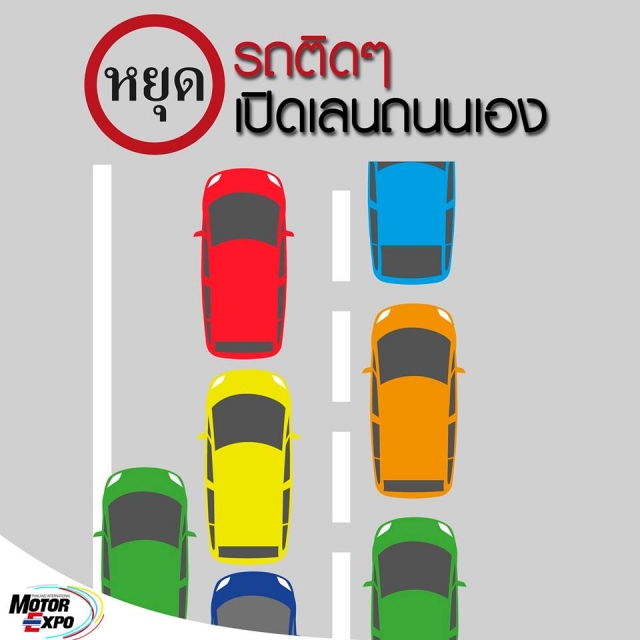
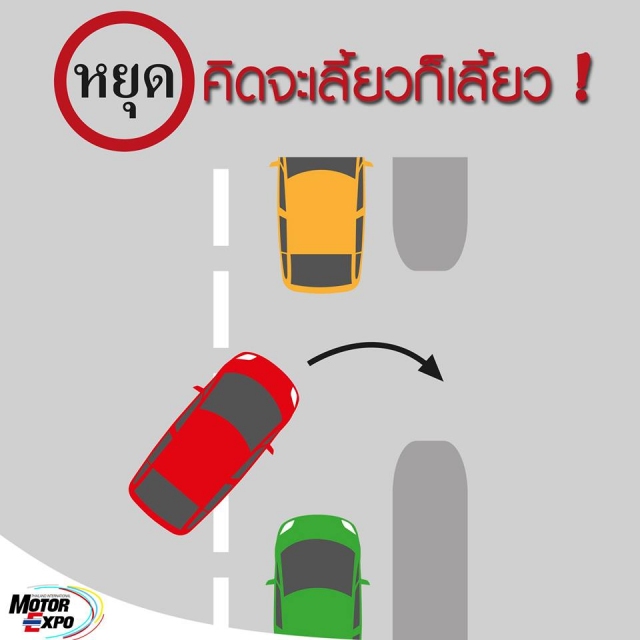
Traffic congestion is difficult to solve, but it can be solved "by ourselves." Many drivers often look for ways to take advantage of fellow road users to get to their destination as quickly as possible, even though other drivers also want to arrive quickly. However, there are still rude and selfish drivers. When traffic is congested, others queue for long distances, but the ill-mannered ones find a way to create a new lane. Once one car starts, many others follow. Don't claim to be "in a hurry" for such behavior; don't forget everyone else is also in a hurry, but most choose not to do what you do! Therefore, Stop! Overtaking on the left to create a new lane is not only dangerous but also illegal.
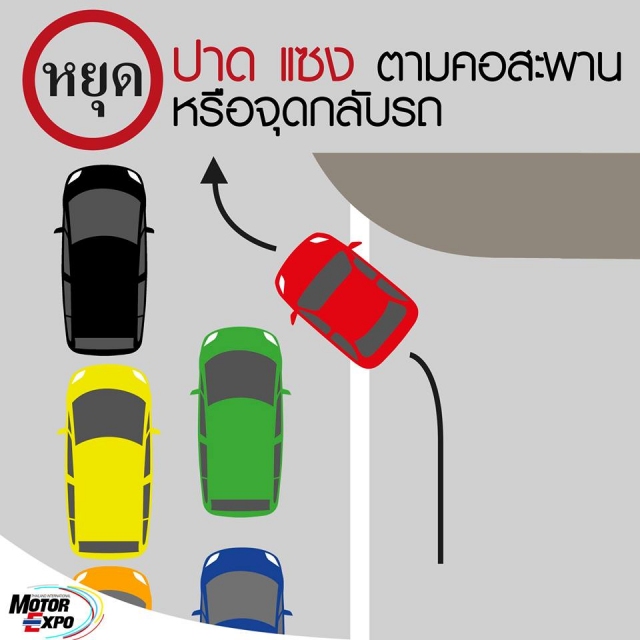
This behavior is similar to the previous point: not queuing (wasting time), better to just cut in and overtake. Nowadays, many roads have a way to deal with those who like to do these things, by installing CCTV cameras to catch them. Whenever you cut in and overtake, "a photo service is available (crystal clear, sent directly to your home via post)."
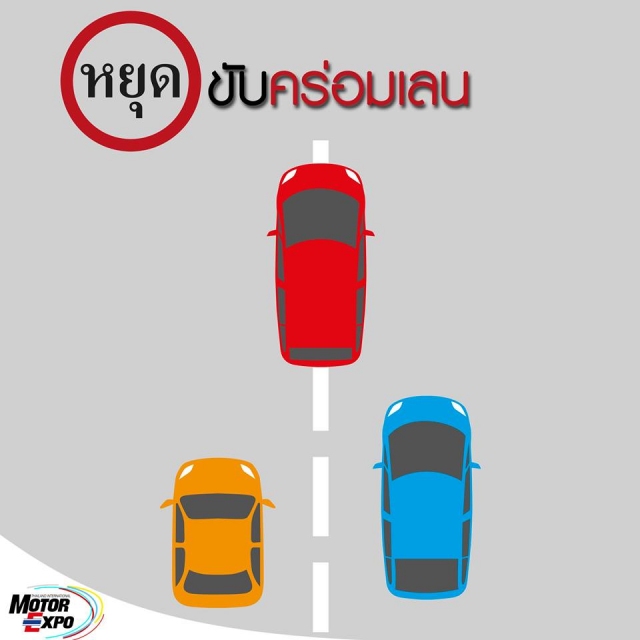
Sometimes I want to drive up and ask, Why? Do you have to straddle lanes? Left or right, you must choose one lane. Friends driving behind are confused! "The road isn't just for your car alone," (friends whispered).
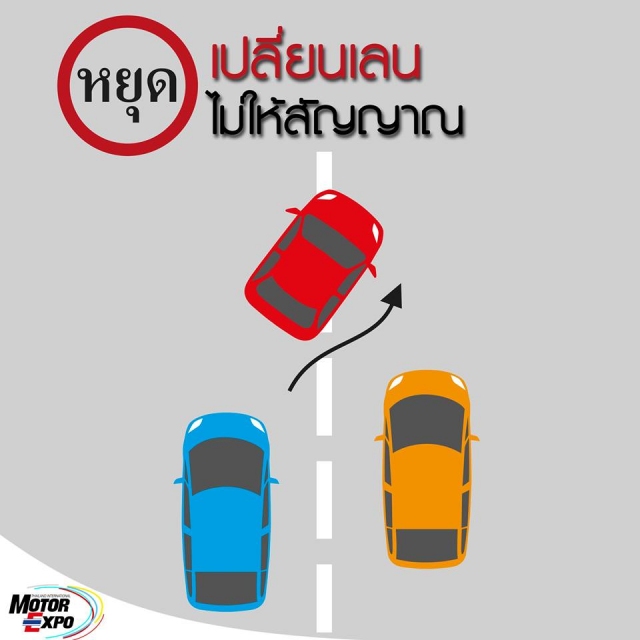
Another significant cause of frequent accidents is the failure to use turn signals while driving. "Turn signals" cost only a few baht per light. Use them when necessary; it's not wasteful. Importantly, they are standard equipment that every car must have. Whether the car is cheap or a luxury car worth tens of millions, it must come from the factory with them. So, don't forget! Signal every time you need to exit a parking space, make a U-turn, or turn left/right. Most often neglect to signal early enough for other cars to see them. They just exit when they feel like it or stop when they feel like it, without considering following drivers. If the car behind is traveling at high speed, a serious accident could occur, and tragically, it could even be fatal. [When to use turn signals? Read more here]
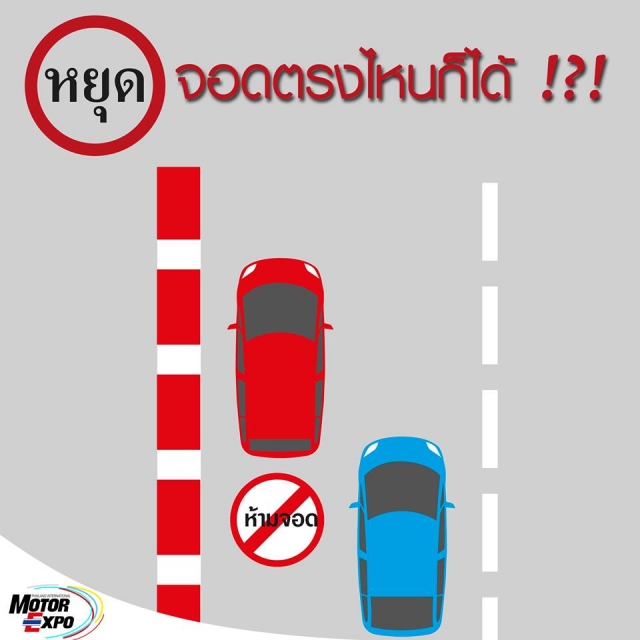
The complacency of car users is frequently seen. Some say, "Just for a moment,"...parking anywhere...This kind of parking is why there are traffic jams! This is the complaint from fellow road users. Let's see what kind of parking is wrong!
Parking in no-parking zones: If a driver parks in any of the 15 prohibited ways, they will be guilty. According to the Land Traffic Act B.E. 2522, Section 57, drivers are prohibited from parking in the following ways:
1. On sidewalks
2. On bridges or in tunnels
3. At intersections or within 10 meters of an intersection
4. Do not park at a crosswalk or within 3 meters of a crosswalk
5. Do not park in areas with no-parking traffic signs
6. Do not park within 3 meters of a fire hydrant
7. Do not park within 10 meters of a traffic signal post
8. Do not park within 15 meters of a railway crossing
9. Do not double park with other vehicles already parked
10. Do not park at the entrance/exit of a building or driveway or within 5 meters of a driveway entrance
11. Do not park between a safety zone and the curb or within 10 meters from the end of a safety zone on both sides
12. Do not park in a dangerous spot
13. Do not park within 15 meters before a bus stop sign and park more than 3 meters past the sign
14. Do not park within 3 meters of a post box
15. Do not park in a manner that obstructs traffic. Anyone who violates or fails to comply with all 15 points under Section 57 shall be liable to a fine not exceeding 500 Baht. A report can be made to the local police station for immediate arrest.
Cr. dailynews.co.th
Signaling while driving is something modern drivers often forget. Did you know? A major cause of frequent accidents is the failure to use turn signals when driving, such as when pulling out of a parking space, parking, making a U-turn, or turning. Most often neglect to signal early enough for other cars to see them. They just exit when they feel like it or stop when they feel like it, without considering following drivers. If the car behind is traveling at high speed, another serious accident could occur, and tragically, it could even be fatal. "Turn signals" cost only a few baht per light. Use them when necessary; it's not wasteful. Importantly, they are standard equipment that every car must have. Whether the car is cheap or a luxury car worth tens of millions, it must come from the factory with them. And for road safety, let's look at some basic principles. When pulling out of a parking space, parking roadside, making a U-turn, or requesting to change lanes, how should we proceed? See more details here
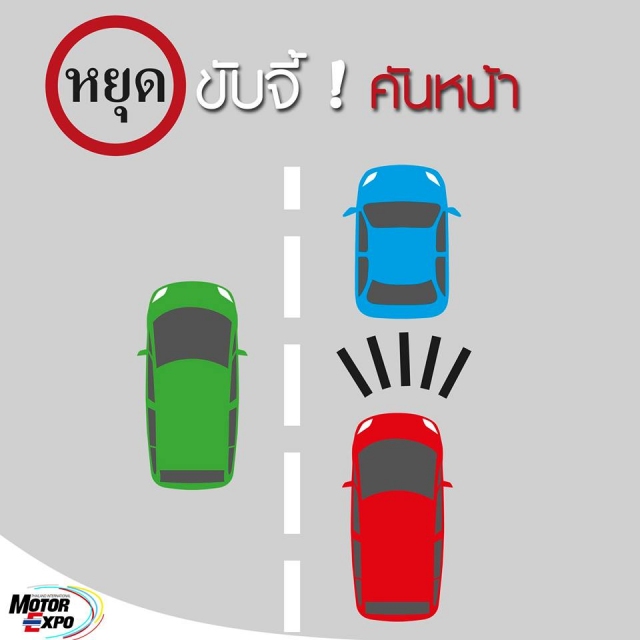
Why should you not tailgate too closely? To drive safely, you must maintain a sufficient following distance. The simple answer is because we cannot start braking at the same time as the vehicle ahead, and we might not brake as effectively as the vehicle ahead either. As soon as the vehicle ahead brakes, its speed immediately decreases, but our car is still moving at a constant speed, causing it to surge towards the vehicle ahead. While our eyes start to see the brake lights illuminate, the brain perceives and decides that braking is necessary, otherwise, we will collide with the rear of that car. The brain sends a command to the leg muscles, and it still takes time to lift the foot from the accelerator to the brake pedal, then extend the leg to press the brake pedal. After pressing, it takes a moment for the brake pads to press against the brake disc and for braking force to begin. Throughout this entire process, our car will continuously get closer to the rear of the vehicle ahead. If the reaction time we allow, which is the following distance, is less than what is needed, then we'll be calling the insurance company, and it could also cause distress to hundreds of other road users. Accidents during heavy rain can be even worse.
According to international standards for maximum safety, the following distance from the vehicle ahead should be half of the speed in km/h, with the unit of length in meters. For example, if driving behind a vehicle at 100 km/h, a distance of 50 meters should be maintained. However, given traffic conditions and driving behavior, reducing it by half is still acceptable, and if circumstances force it, allowing for 1/4 is permissible, although this is actually no longer a safe distance, it is still better than the commonly used 1/10. Therefore, from the original example, the recommended following distance at 100 km/h is approximately 50 meters to 30 meters. Why? Is it necessary to maintain a sufficient following distance? Read more here
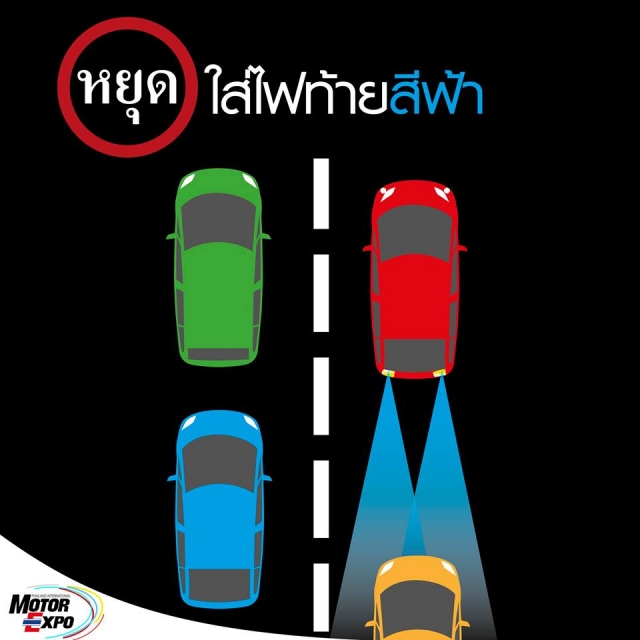
Modifying car taillights to blue is both dangerous for other road users' eyes and illegal. If you know, stop it! When driving behind a car with blue taillights, we often get a headache because blue light can penetrate to the retina, possessing more destructive power to the cornea or retina than other lights. Furthermore, modifying taillights is a clear violation of the law, as the law specifies that car taillights must be red and turn signals must be amber only. If officers find a violation, a fine not exceeding 2,000 Baht will be imposed. [Read here: Blue taillights: Happiness at the expense of others' suffering!?!]
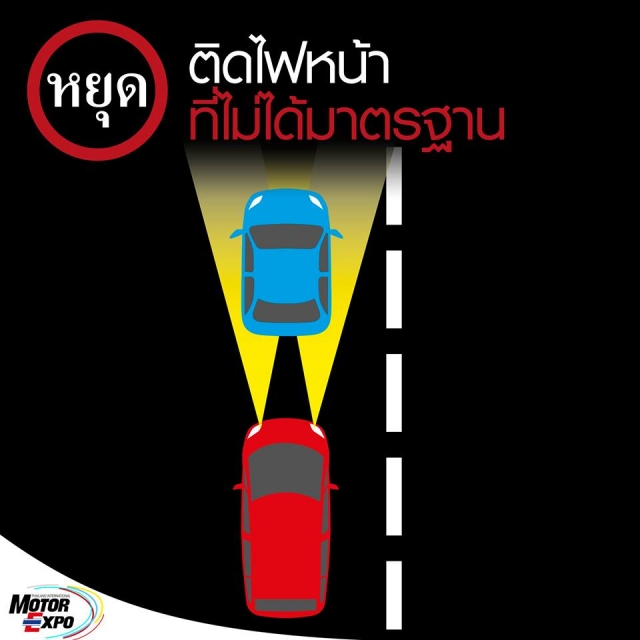
Another very important etiquette for car and motorcycle users that should not be overlooked: no driver or even pedestrian would like it if a car coming from the opposite direction or driving behind us turns on its high beams |or has blinding xenon lights| whether intentionally or unintentionally. This can cause us to lose concentration while driving, leading to blurred vision and potentially unforgivable accidents. Recently, an online user even posted a method to "get back at people who like to drive with high beams on." If you want to know, search on Google.
Importantly, we do not have an agency responsible for road safety in our country. Even car dealer service centers lack technical understanding and proper, serious maintenance, because the headlight beams of almost every car are not correctly aligned, which is truly dangerous.
Don't forget that a car's lighting system is not just for us to see our path at night, but also not to disturb the vision of fellow road users or surrounding pedestrians. Therefore, the brightness level of the lights, the position of the light beam hitting the road, and the color tone of the beam must be appropriate. Adjusted according to standards, a car's headlight beam is like a double-edged sword. If we adjust it for clear visibility, with a high and wide beam, it often blinds oncoming road users. But if we adjust it too low (out of consideration for fellow road users), we often can't see anything. Therefore, adjusting to the standard is crucial. Headlight adjustment doesn't need to be done every month; it can be checked once a year, or every time the headlights are changed, or when the car's ride height is altered (raised/lowered), all of which affect the lighting level almost entirely. Read related articles here /
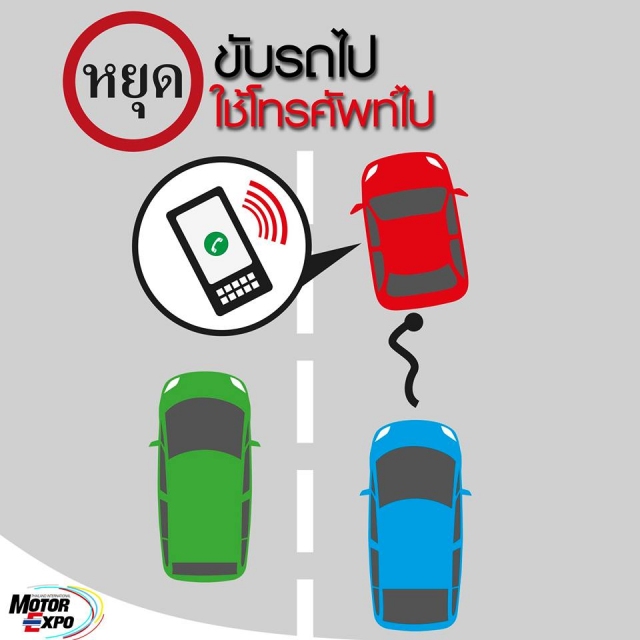
Using a phone while driving is 4 times riskier than drunk driving! Why? Try to understand and imagine why everyone knows that texting and using a mobile phone while driving is dangerous, yet they continue to do it, greatly challenging accidents.
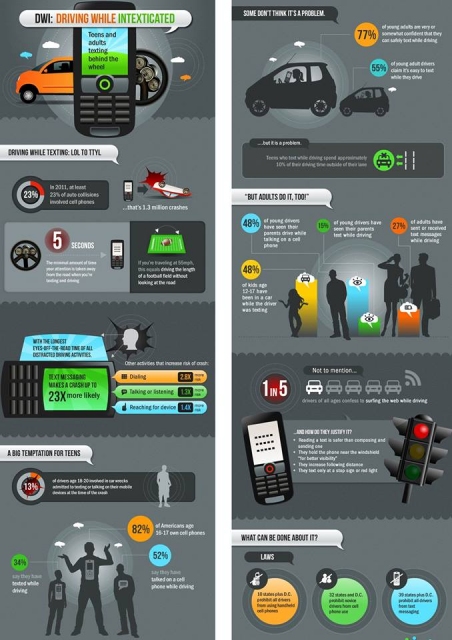
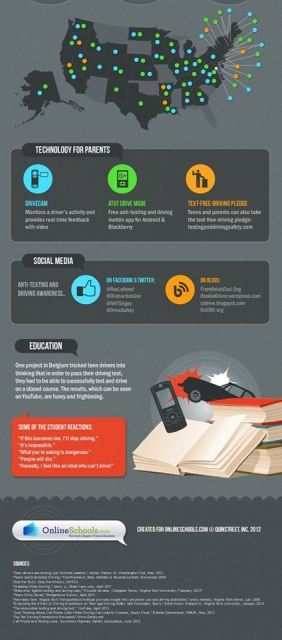
Courtesy of: https://www.onlineschools.com onlineschools.com
● Although drunk driving causes fewer accidents than using a phone while driving, drunk driving still carries a risk of causing accidents as well.
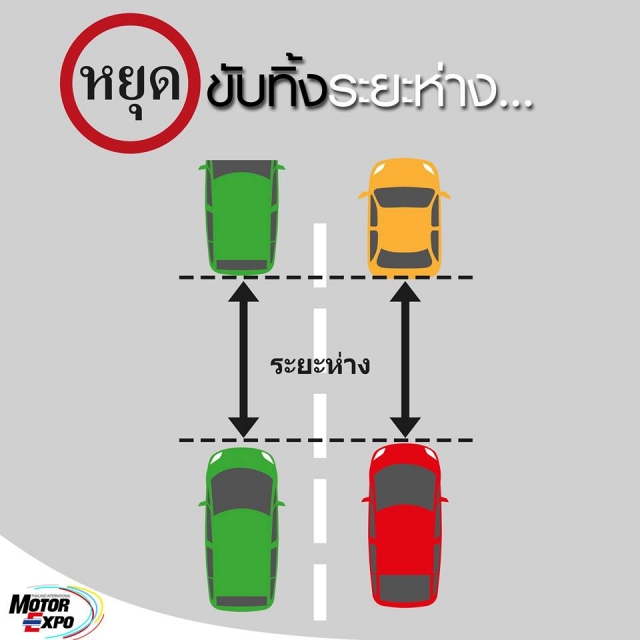
For safe driving and not obstructing others, drivers should maintain a reasonable distance from the vehicle ahead. This is because, at times, in abnormal weather conditions, accidents can occur at any moment. Maintaining distance from the vehicle ahead allows us to be prepared for unexpected emergencies at all times.
However, if you drive with too much distance, the vehicle behind will try to overtake you, unknowingly increasing the chance of accidents for others. This is because over 80% of road accidents result from improper road behavior, and over 11% come from overtaking on the left. The reason the law prohibits overtaking on the left is that if a proper following distance is maintained, it might not have much impact, as visibility on both left and right sides is good. But if driving too close to the vehicle ahead, visibility of vehicles on the left side is greatly reduced. And if a driver pushes into the left lane to overtake, it could cause a collision with parked cars. For this reason, overtaking on the right is safer. Furthermore, overtaking on the left is also a violation of the Land Traffic Act B.E. 2522, Chapter 2, Section 45, which states that drivers are prohibited from overtaking another vehicle on its left side. Given this, why would anyone still drive with excessive distance? See an example here
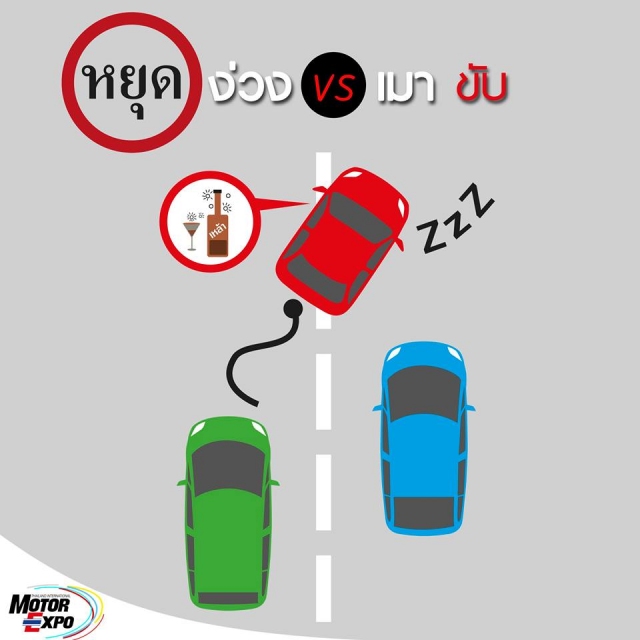
Most road accidents are caused by negligent drivers, with drunk driving and drowsy driving occurring in equal proportions. Each year, 14,000 people die from accidents, of which up to 2,800 deaths, or approximately 20% of reported accidents, are due to drowsy driving and falling asleep at the wheel, causing damages worth up to 20,000 million Baht annually. Accidents caused by falling asleep at the wheel are quite severe because the person is unconscious and unaware, thus unable to swerve or brake. A person who loses 1 hour of sleep every day for one week will exhibit symptoms similar to someone with 100 milligrams of alcohol in their body. Alcohol or intoxication can be measured by instruments, but drowsiness or fatigue leading to falling asleep at the wheel is not regulated by law and cannot be measured by instruments because it is a personal matter best known to oneself.
Therefore, when symptoms occur, such as driving slower and slower even when there's an opportunity to drive faster, or jerking the car, it's a consequence of drowsy drivers trying to fight sleep. When extremely drowsy and almost asleep, the foot on the accelerator will lighten. Upon realizing it from a trance, the driver will quickly press the tip of their right foot, the gas pedal is pressed, and the car will immediately lurch forward, causing the car to accelerate sharply. If you are a passenger and feel this, be very careful. As for drivers who drink and drive, it's equally terrifying. Read more here !


Follow Motor Expo Club Network